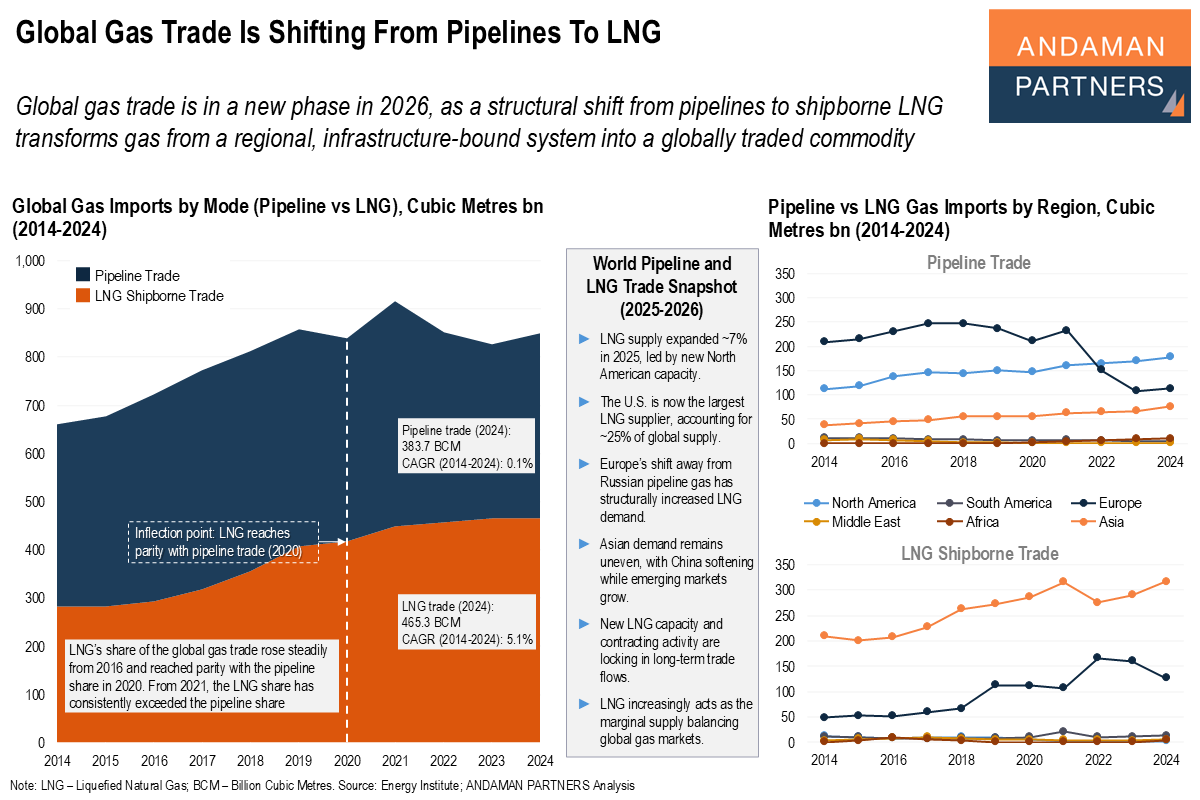
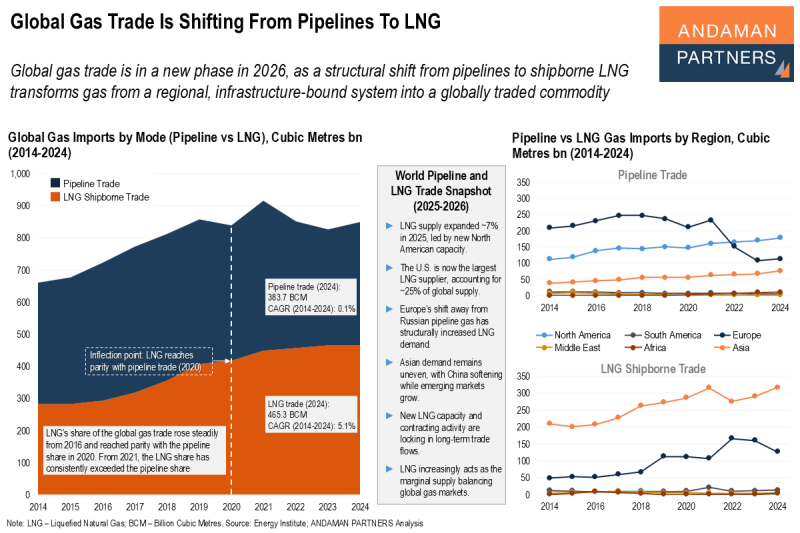
Global gas trade is in a new phase in 2026, as a structural shift from pipelines to shipborne LNG transforms gas from a regional, infrastructure-bound system into a globally traded commodity.
After a decade in which shipborne Liquefied Natural Gas (LNG) trade steadily gained market share, a new wave of supply growth is now reshaping the market, shifting import patterns and facilitating a deeper integration of regional gas markets. Global LNG supply is estimated to have increased by around 7% in 2025, driven primarily by new North American capacity, easing market tightness and reinforcing LNG’s role in balancing global gas demand.
Between 2014 and 2024, pipeline gas imports were broadly flat, rising at only 0.1% CAGR, while LNG imports grew at 5.1% CAGR, reaching 465 billion cubic metres (BCM) in 2024. LNG reached parity with pipeline trade around 2020, and from 2021 onward, it consistently exceeded pipeline volumes. In practical terms, gas is moving away from a mainly regional, infrastructure-bound system toward a more flexible, seaborne and globally traded market.
Regionally, the divergence is striking. Europe’s pipeline imports have fallen sharply, especially since 2022, while its LNG imports surged to a record level above 175 BCM in 2025 as buyers replaced lower piped inflows and rebuilt storage. Asia remains the largest LNG-importing region, but demand in 2025 was more uneven, with China softer even as other Asian and emerging-market demand held up.
LNG exporters, traders, shippers and regasification infrastructure providers stand to benefit from rising volumes, greater route flexibility and a more liquid market. Importers with access to diversified LNG infrastructure gain resilience and sourcing optionality.
By contrast, market participants primarily tied to fixed pipeline systems will experience slower growth and less flexibility. For global companies, this means gas procurement is becoming both more global and more exposed to cross-regional price swings: supply security may improve, but volatility management becomes more important.
Also by ANDAMAN PARTNERS:
ANDAMAN PARTNERS supports international business ventures and growth. We help launch global initiatives and accelerate successful expansion across borders. If your business, operations or project requires cross-border support, contact connect@andamanpartners.com.

ANDAMAN PARTNERS Wishes You a Happy and Prosperous Year of the Horse!
Compliments of the Chinese Lunar New Year to all our clients, customers, suppliers and partners.

ANDAMAN PARTNERS to Attend Investing in African Mining Indaba 2026 in Cape Town
ANDAMAN PARTNERS Co-Founders Kobus van der Wath and Rachel Wu will attend Investing in African Mining Indaba 2026 in Cape Town, South Africa.
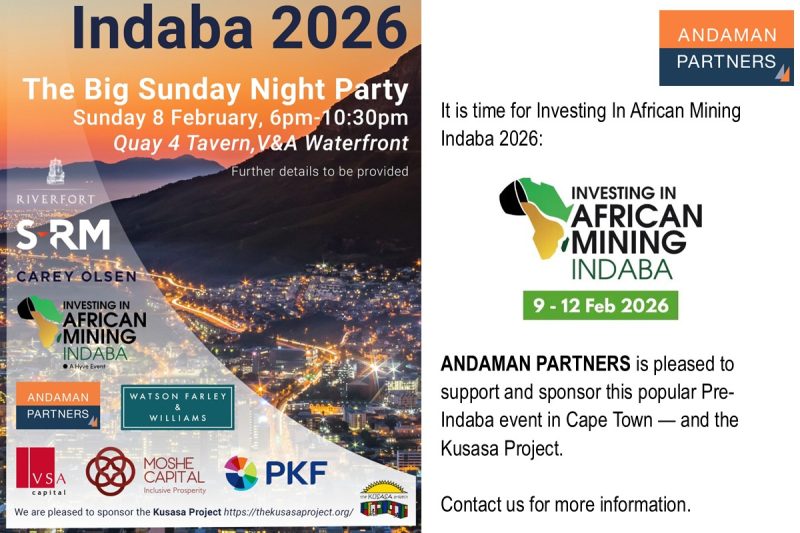
Join ANDAMAN PARTNERS at Networking Event in Cape Town Ahead of Mining Indaba 2026
ANDAMAN PARTNERS is pleased to support and sponsor this popular Pre-Indaba event in Cape Town.
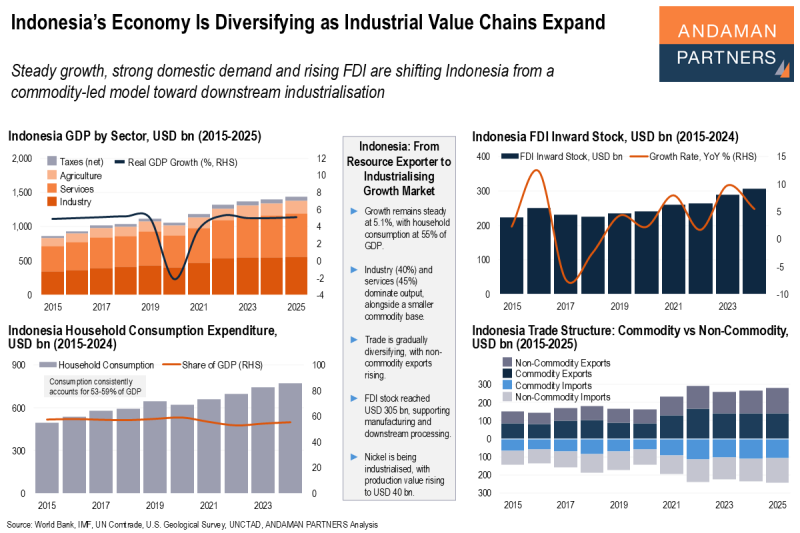
Indonesia’s Economy Is Diversifying as Industrial Value Chains Expand
Steady growth, strong domestic demand and rising FDI are shifting Indonesia from a commodity-led model toward downstream industrialisation.
Global Gas Trade Is Shifting from Pipelines to LNG
Global gas trade is in a new phase in 2026 amid a structural shift from pipelines to shipborne LNG.

Global Car Markets and the Uneven Transition to Electric Vehicles
Global passenger car sales reached 92 million units in 2025, including more than 20 million EVs, but adoption varies widely across markets.