China Navigator – Q3 2026
ANDAMAN PARTNERS outlines and unpacks some of the broad shifts and fine intricacies of China’s economic development and transition.

ANDAMAN PARTNERS outlines and unpacks some of the broad shifts and fine intricacies of China’s economic development and transition.
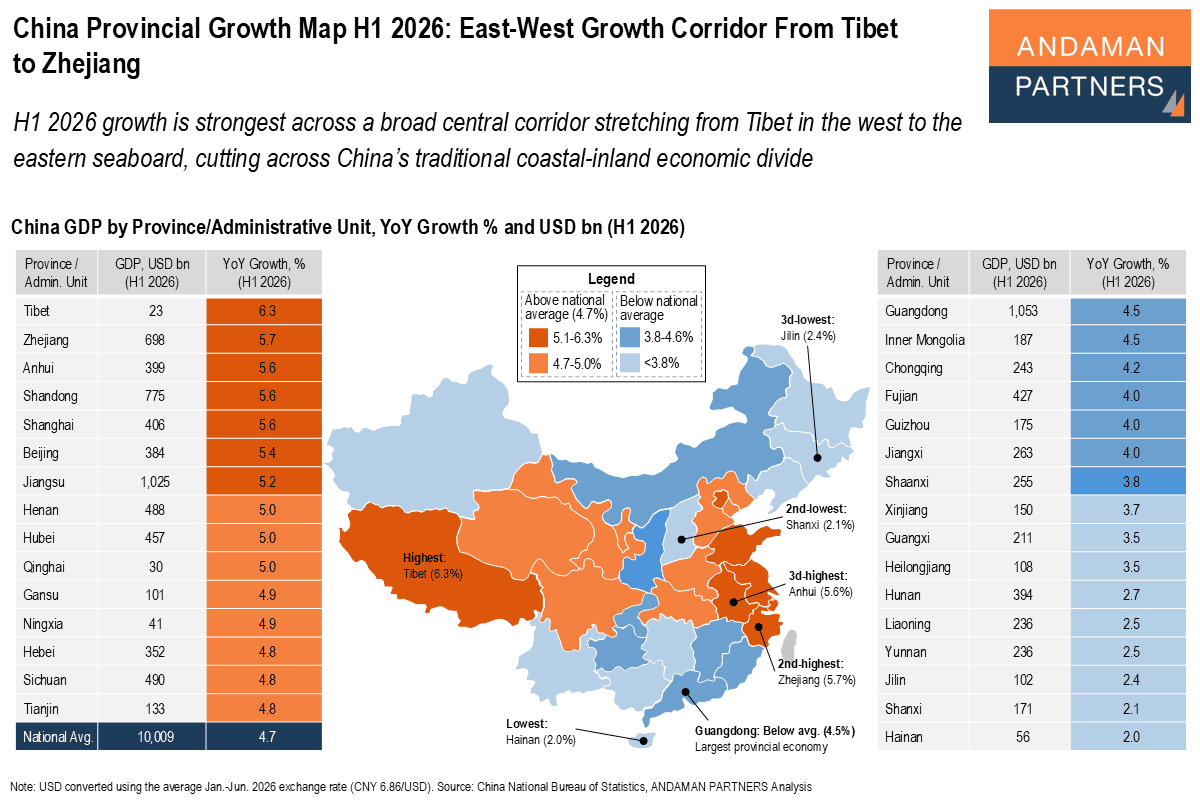
H1 2026 growth is strongest across a broad central corridor stretching from Tibet in the west to the eastern seaboard
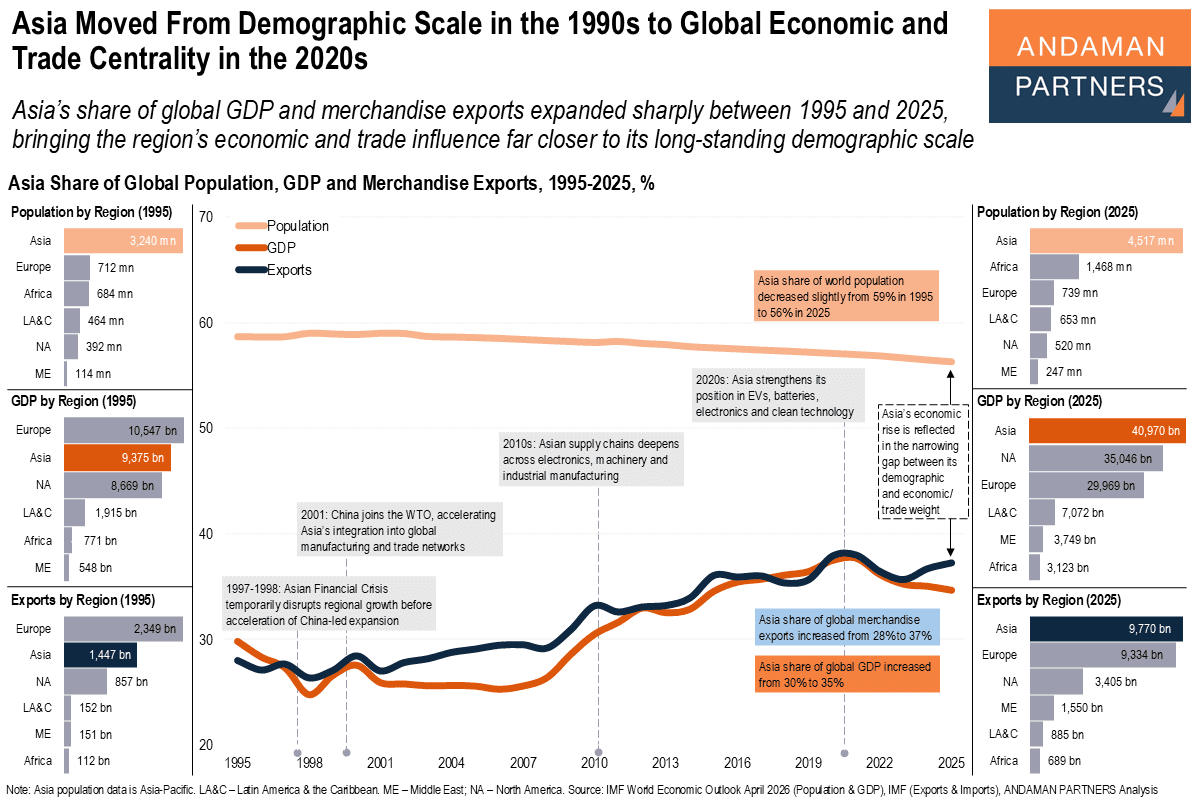
Asia’s share of global GDP and exports expanded sharply to 2025, bringing the region’s influence closer to its demographic scale.
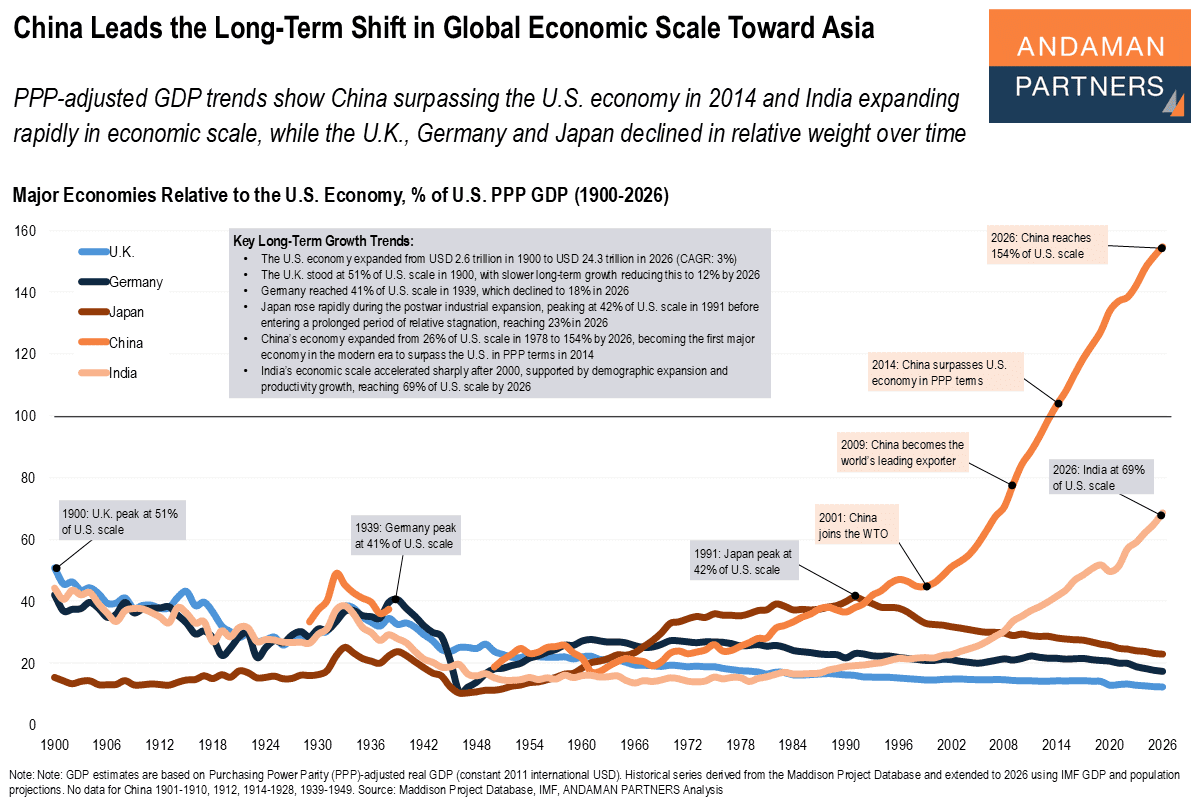
PPP-adjusted GDP trends show China surpassing the U.S. economy in 2014 and India expanding rapidly in economic scale.
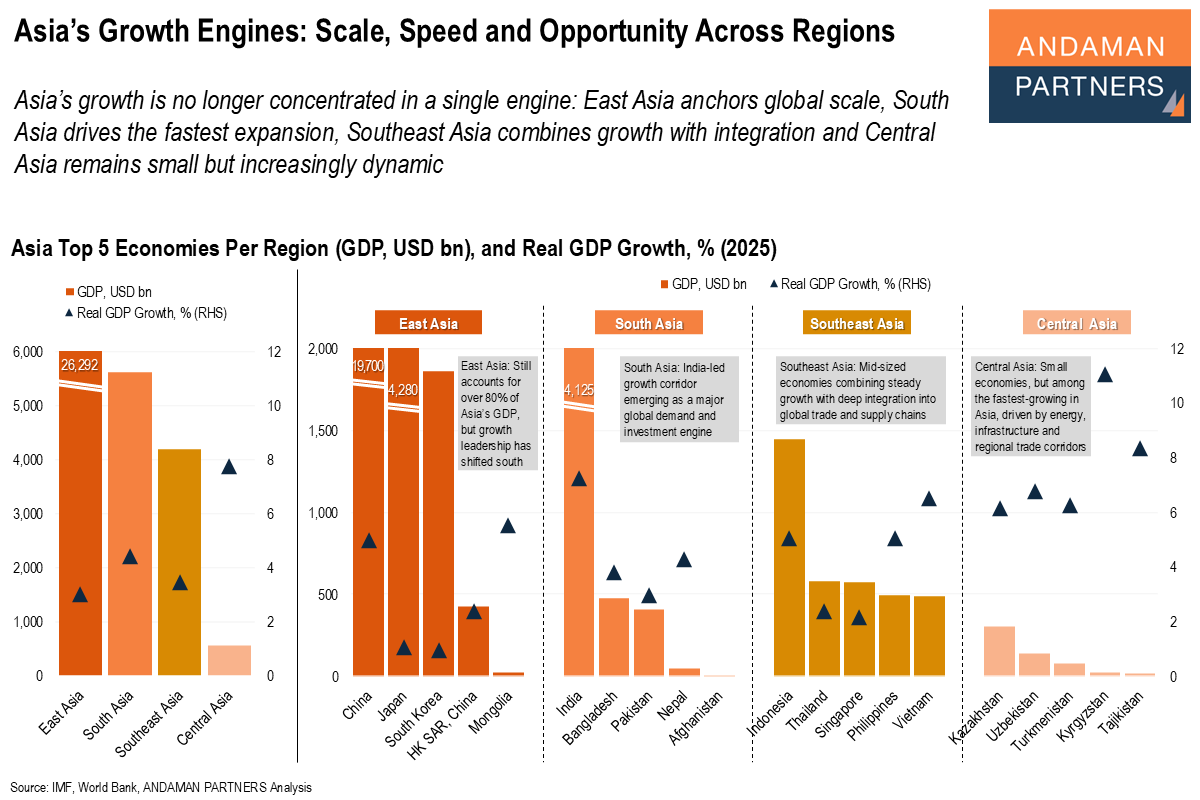
Asia's scale, speed and integration are no longer concentrated in a single core, but spread across multiple, complementary engines.
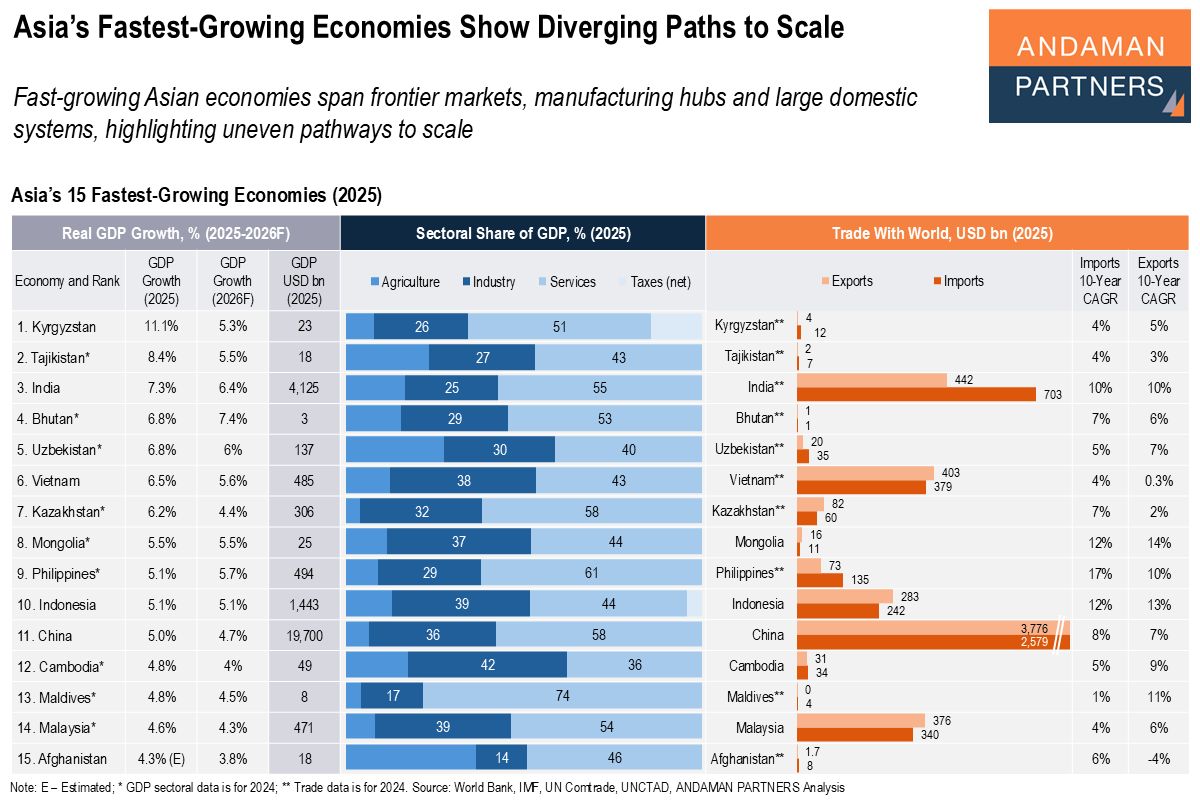
Fast-growing Asian economies span frontier markets, manufacturing hubs and large domestic systems, highlighting uneven pathways to scale.
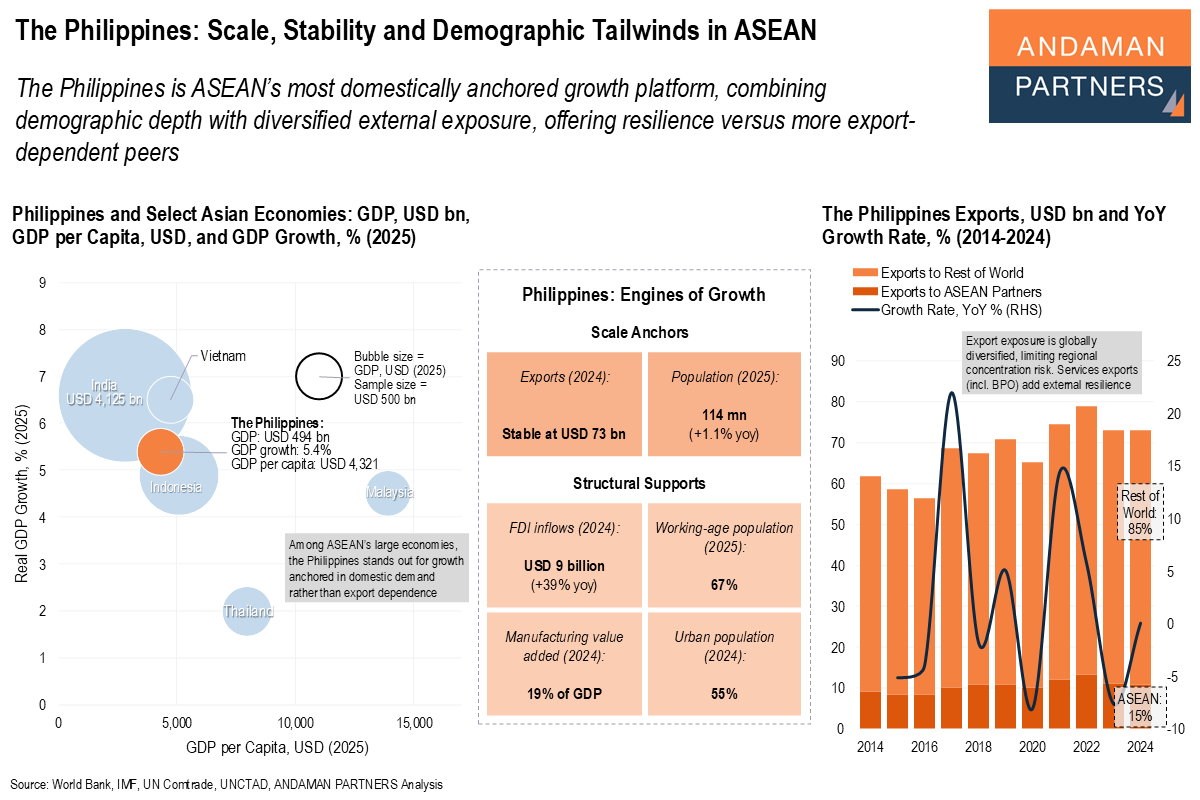
The Philippines is ASEAN’s most domestically anchored growth platform, combining demographic depth with diversified external exposure.
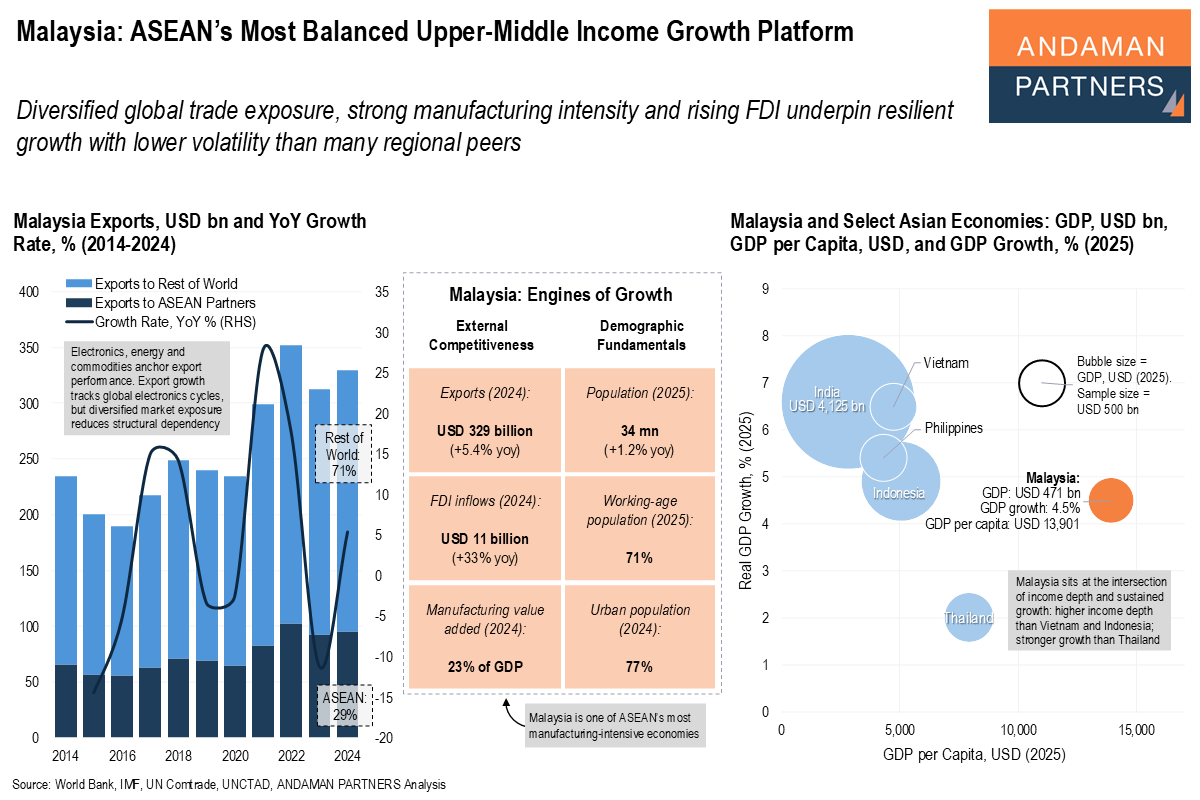
Diversified global trade exposure, strong manufacturing intensity and rising FDI underpin resilient growth with lower volatility than many regional peers.
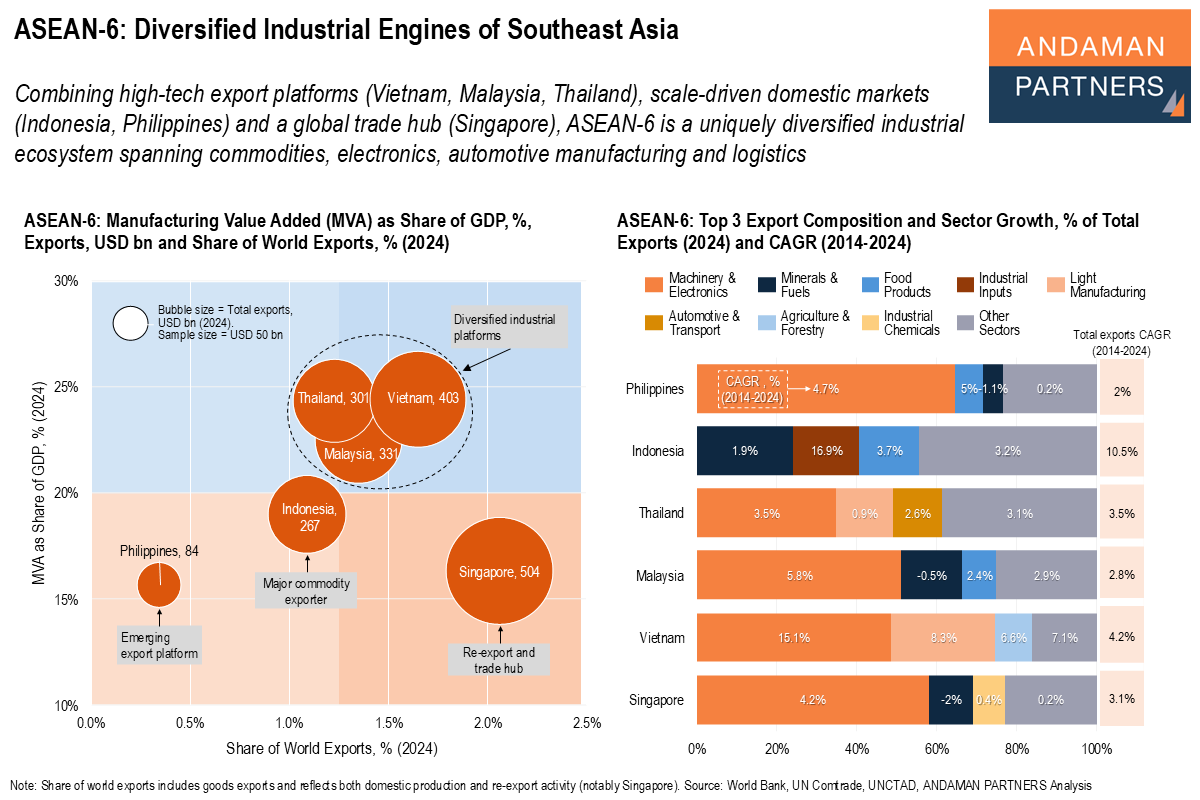
Combining high-tech export platforms, scale-driven domestic markets and a global trade hub, ASEAN-6 is a uniquely diversified industrial ecosystem.
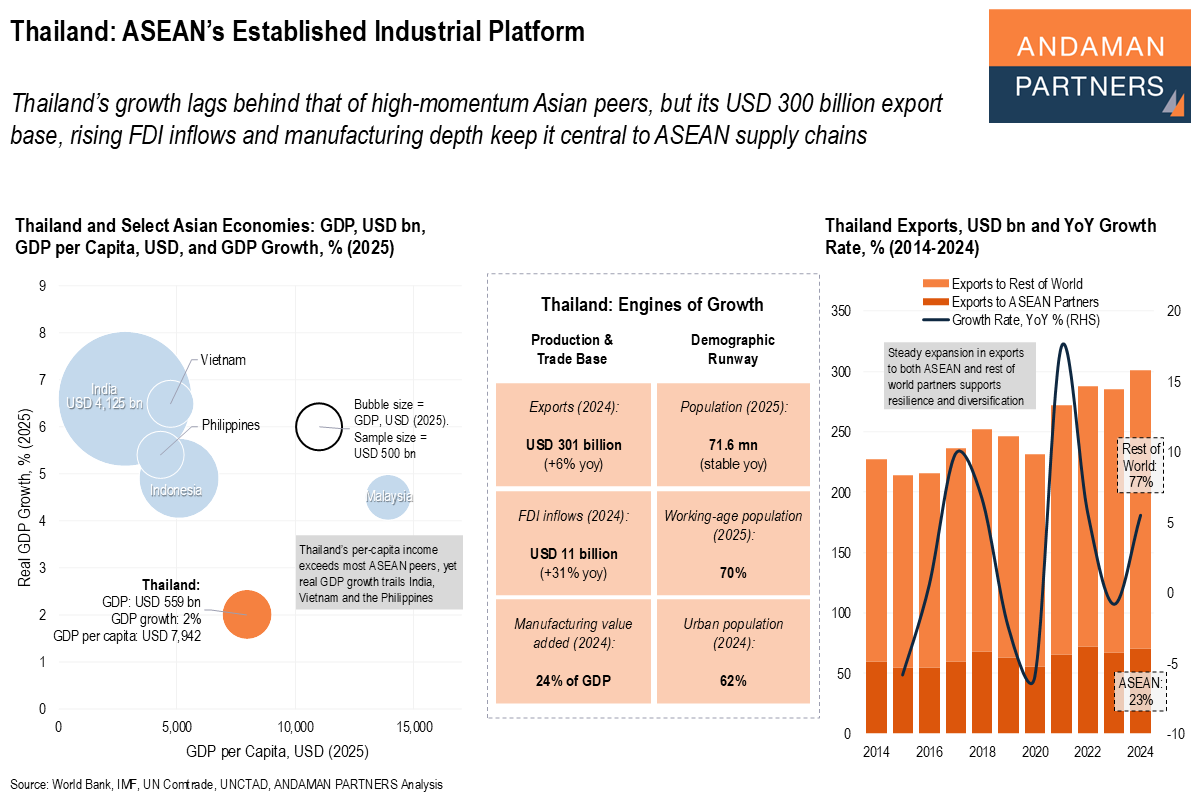
Thailand’s USD 300 billion export base, rising FDI inflows and manufacturing depth keep it central to ASEAN supply chains.